
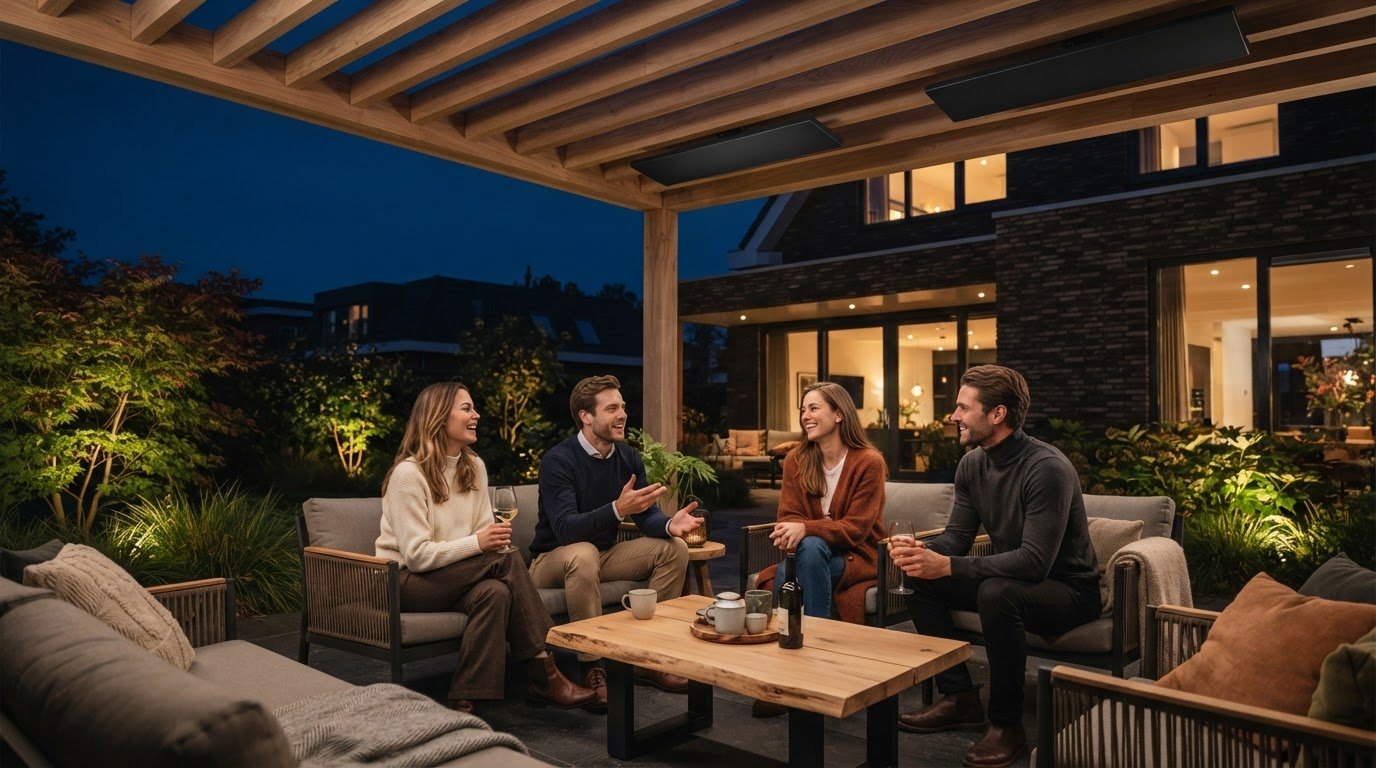
A terrace heater should match how you use your outdoor space. Will two people occasionally dine under a canopy, or will a large hospitality terrace be used regularly? This guide compares practical choices: perceived warmth, light, fixed or movable positioning, controls and maintenance.
Key points
Do not choose by wattage or appearance alone. Consider seating, mounting options and actual use. Ask about outdoor approval, visible light, controls and parts for each model. An electric heater is not automatically cheaper, windproof or suitable for every season.
Which heater suits your terrace?
Start by deciding between a fixed heated area and a layout that changes regularly. A fixed heater can preserve floor space and serve permanent seating. A movable version offers flexibility but needs a stable, safe position and suitable power supply. Use only a stand or bracket permitted by the manufacturer.
Consider when the terrace is used. A short coffee break has different warm-up requirements from a long meal. A controllable zone around a few tables may be more practical than switching every heater on together. Shelter helps comfort but does not automatically turn a terrace into a heated indoor room.
What determines the warmth you feel?
Infrared radiation can transfer energy to people and surfaces within the heater’s reach. The appliance also heats surrounding air. Perceived warmth depends on distance, direction, reflector, clothing and surroundings. An obstacle can intercept some direct radiation.
Wind does not carry radiation away like warm air, but it can cool people and surfaces more strongly. Do not expect constant comfort regardless of wind or outdoor temperature. Product categories and wavelength terms provide guidance, but the actual model’s coverage diagram and permitted use matter more than a general promise.
Comparing gas, lamp and dark radiant heaters
Gas heating involves fuel storage, combustion and maintenance. Electric heating requires attention to available electrical capacity, tariffs and safe wiring. Both can emit radiant heat; describing all gas heaters as air heaters alone is inaccurate. Compare costs at similar comfort and use.
A visibly glowing element affects terrace ambience. Carbon, halogen and quartz labels do not describe every aspect of intensity or visible light. Low Glare may mean less light than another version, but no universal reduction percentage applies. Dark radiant heaters offer little or no visible light; check warm-up time and suitability for your space.
Checks before ordering
Measure the distance from mounting point to seating. Check structural support, nearby materials, moving awnings and walking routes. Use heights, angles and clearances from the model’s manual; generic advice about a few metres or fixed watts per m² does not replace these checks.
An IP code is one part of assessing outdoor suitability. The heater and complete connection must suit exposure and mounting position. IP codes do not prove protection against every weather condition or corrosion. Follow cleaning, storage and covering instructions too; never cover a hot appliance.
Have the connection assessed for multiple heaters, fixed wiring or uncertain capacity. Dimmers, timers and receivers must suit the heater type and electrical load. Not every heater is dimmable and not every smart plug is suitable.
Our advice and support
We help private and business end users, installers and wholesalers. Send terrace photographs, dimensions and possible mounting points. Specify the number of seats and whether zone control is required. We advise on a suitable combination of heater and controls.
Assess quality through documentation, model data, available parts and warranty. Origin alone does not prove better heat transfer or longer life. Colours and special mounting options depend on the model; ask about availability before finalising the design.
Choose a terrace heater with a clear overview
Compare more than purchase price: include mounting, controls and electrical work. Decide who operates the heater and how to avoid heating empty zones. A complete proposal clarifies what is included and what work remains.
Frequently asked questions about terrace heaters
How can I track operating costs?
Multiply actual operating power in kW by hours to obtain kWh, then by your electricity tariff. Account for dimming levels and simultaneous use. Solar panels can cover simultaneous consumption but do not guarantee that daytime generation pays for evening use.
Are safety and service life the same for every model?
No. Follow instructions for distance, exposure and operating time, avoiding excessive heating of skin, eyes and materials. Do not rely on general health promises. Lamp life, replacement and maintenance vary by version. Check the manual and warranty rather than assuming a fixed number of years.