
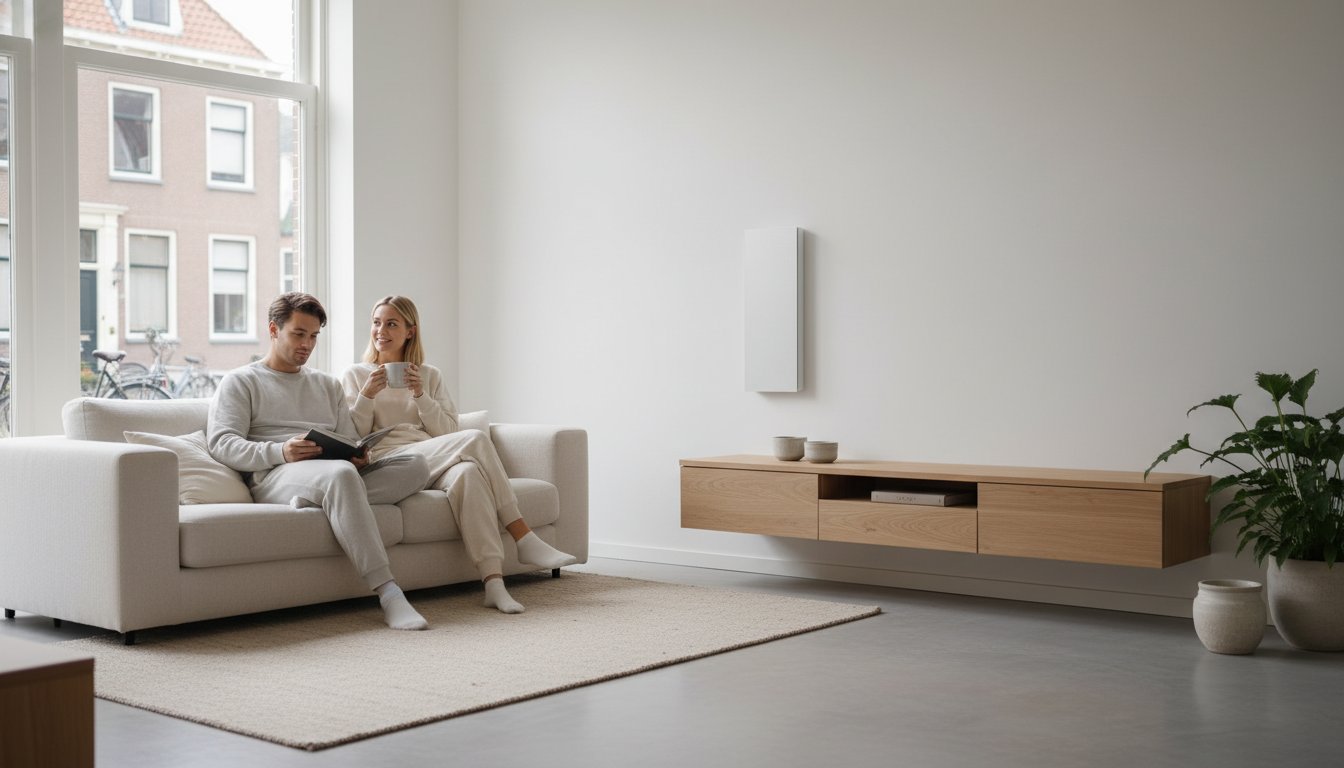
Affordable electric heating starts with the heat you actually need. An inexpensive appliance for a few hours at work is a different choice from a primary heating system for an entire home. Compare not only the purchase price but also installation, actual energy use, controls and maintenance for the same comfort requirements.
This guide helps you weigh the options without declaring any technology always the cheapest. We discuss applications with private and business end users and support installation companies and wholesalers. Targeted supplementary infrared heating may be suitable, but so may improving existing controls, insulation or choosing another system.
Key points
Define operating hours and the zones to be heated. Compare the same achieved temperature and perceived warmth. Calculate kilowatt-hours using actual power draw and operating hours, and use your own tariff. A lower wattage, higher purchase price or smart app does not, by itself, demonstrate lower overall costs.
Affordable electric heating: purchase price or running costs?
First distinguish purchase costs from running costs. A modest investment may matter for occasional use; with many heating hours, annual consumption becomes more important. Include installation, electrical alterations, control components and possible replacements. Ask about warranty and service for the specific products and compare the same period.
Reduce heat demand where appropriate, for example through insulation or by fixing unwanted draughts. Maintain necessary ventilation. A targeted heat source may provide local comfort, but it does not repair a poor building envelope. For primary heating, have heat losses calculated before equipping an entire home around an inexpensive appliance.
Distinguishing heat output from energy performance
A resistance panel, convector and electric resistance boiler convert almost all the electricity they draw into heat. They may differ in heat distribution, controls and suitability for a particular zone. A heat pump works differently: it moves environmental heat and can deliver several units of heat per unit of electricity. Do not therefore compare only a panel’s conversion efficiency with an entire heat pump system.
Infrared can heat people and surfaces within reach directly and also releases heat by convection. Useful perceived warmth depends on positioning, distance, clothing and activity. A fixed relationship such as eighteen degrees always feeling like twenty cannot be promised generally. Ventilation and heat losses still exist; high emissivity does not make a home a loss-free heat store.
Warm-up time for brief use
Distinguish the first noticeable radiant warmth from bringing an entire room up to temperature. Both times depend on the model and room. Do not rely solely on an occupancy sensor if a seating area still takes a long time to warm up. Test under actual conditions and programme only the preheating needed for suitable comfort.
Comparing electric heating for the same heat demand
For a fixed workstation, targeted supplementary heating may be a different choice from an electric system for every room. For example, view the specifications of our under-desk panel with dimmer and check whether its mounting arrangement suits your desk. When adding supplementary heating, include the remaining consumption of the main heating system. Comparing a small desk panel with a fully heated home does not establish a general savings factor.
For primary heating, compare options including a heat pump, resistance panels, an electric boiler, or retaining and improving the existing system. Ask for calculated annual consumption, investment and maintenance for each option. Heat from pipes inside the heated building envelope is not always entirely lost. A product name does not establish general legal permission or a prohibition; have the applicable building requirements checked.
A simple cost calculation
An appliance actually drawing 600 watts for one hour uses 0.6 kilowatt-hours. Our energy consumption calculator lets you calculate using the power, operating time and tariff you enter. Multiply consumption by your own tariff. With a thermostat, actual heating time counts, not simply the time the room is used. For variable tariffs, match consumption to the correct time period. Show investment and fixed costs separately.
Practical steps to avoid unnecessary consumption
Use suitable schedules and a representative sensor location. Keep the measuring point away from direct panel radiation, sunlight and draughts, and maintain the specified clearances. A display in 0.1-degree increments does not demonstrate 0.1-degree measurement accuracy. Choose wall or ceiling mounting according to coverage and the model’s conditions, rather than assuming one position is always more economical.
Avoid heating unused rooms unnecessarily, but consider moisture, neighbouring zones and other users. An open living space does not automatically have independent air temperatures for each panel. Do not let a lower setting compromise appropriate comfort or the protection of vulnerable parts of the building.
Solar electricity and dynamic tariffs
Your own generation can reduce grid consumption when production and demand coincide. Also compare what you would otherwise receive for exported electricity, and account for winter heat demand. Additional heating when tariffs are low or sunshine is plentiful can increase heat losses. Check your contract conditions; solar panels do not automatically make heating free or mean that a scheme or tax benefit always applies.
We help you choose heating within your budget
Assess the required capacity, permitted mounting, controls, warranty and service for the exact model. A high purchase price or European origin does not demonstrate a lower electricity bill; an inexpensive appliance is not automatically unsuitable either. Look for traceable specifications and measurements and have the application assessed. An undersized appliance that provides insufficient heat is not a fair comparison with a system delivering adequate comfort.
Low-maintenance technology still requires cleaning and inspection according to the manual. Include thermostats, receivers and connections when assessing service life and costs. There is no general guarantee of twenty years of operation or no further maintenance. Ask which parts can be replaced and what support is available.
Choosing according to your use
Share dimensions, insulation details, usage times, desired temperatures and information on the existing installation. Photos or a floor plan help us discuss unobstructed positions. We consider which products suit the purpose with you and, where relevant, your installer or wholesaler. Then request a quotation clearly stating included parts, mounting conditions and assumptions behind any calculated consumption.
Frequently asked questions
Is an infrared panel always more economical than a convector?
No. Both resistance appliances convert electricity into heat. Any difference arises from heat distribution, controls and the same usage conditions. Targeted personal warmth can give a different result from heating an entire room. Without measurements or a substantiated calculation, a fixed benefit cannot be promised.
Is the existing electrical connection sufficient?
That depends on the model, simultaneous loads and the installation. A plug on an appliance does not prove that every socket or extension lead is suitable. If in doubt, have wiring, protection and controls assessed and follow the mounting conditions. Include any alterations in the cost comparison.