
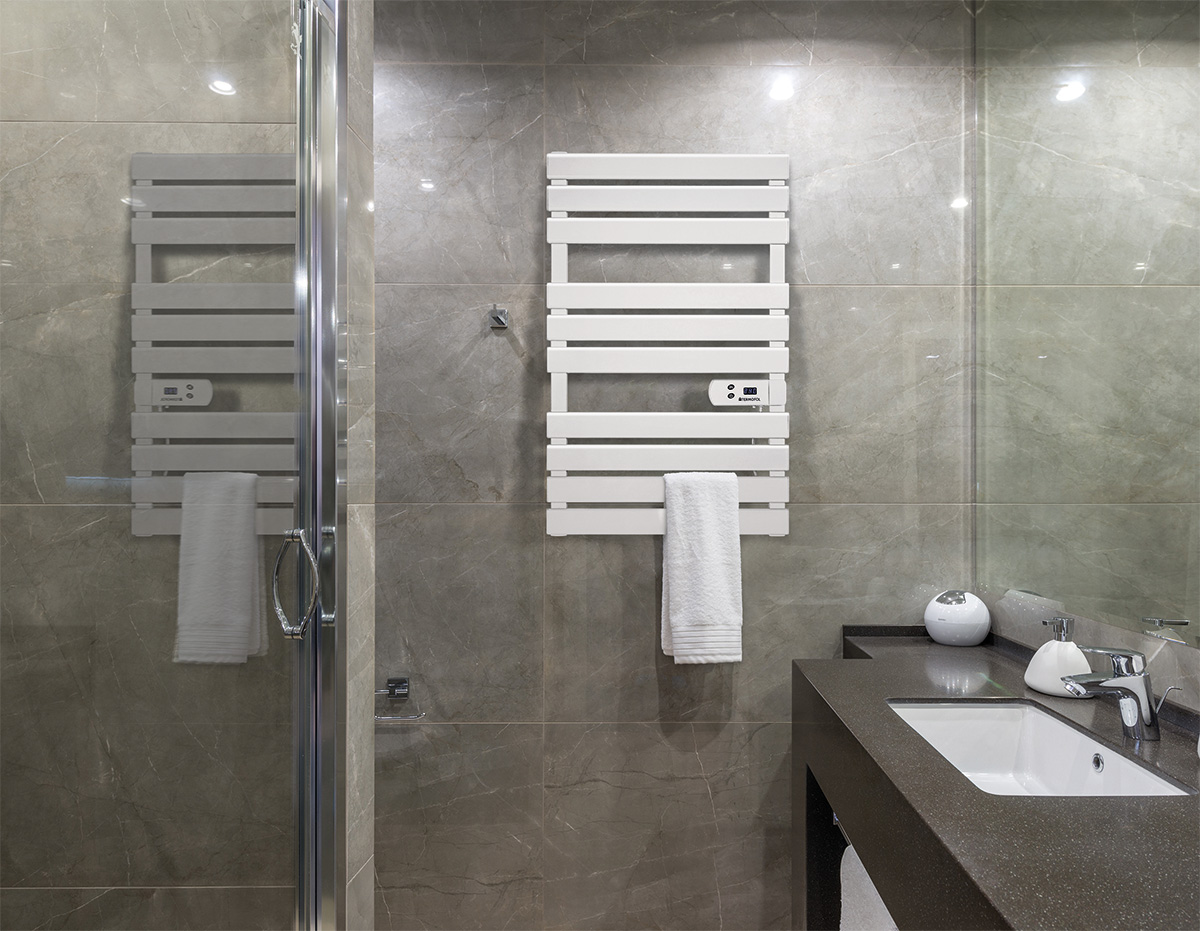
Electric heating for one room or the whole home
With electric heating, product choice and building design are closely connected. First decide whether you need supplementary heating or want to replace an existing installation. For a whole home, heat loss, electrical capacity, individual rooms and controls must be considered together. Choosing a product by wattage alone is insufficient.
Determine the heat demand of each room
Record floor area, height, external walls, glazing, insulation and ventilation for each room. Note the desired temperature and occupancy. A bedroom, bathroom and living room need not share one schedule. Spaces on an open floor influence each other; separate app groups do not automatically create independent zones.
Then choose the heat emitters. Infrared panels combine radiation and convection and require appropriate positioning. Convectors and electric radiators heat the room differently; designs and controls vary. Underfloor heating requires the complete floor build-up to be included in the design. Primary heating is justified only when the system can supply the required heat.
Comparing consumption, warm-up time and environmental impact
Compare systems at the same comfort, usage and heat loss. Lower appliance output may mean longer operating hours. For a resistance heater, multiply kW by actual operating hours to calculate kWh. A heat pump works on a different principle and requires a separate comparison. A general ranking of low or high consumption by heater type does not provide a reliable cost estimate.
Warm-up time depends on the model, initial temperature and room. Electric does not mean zero warm-up time. Environmental impact depends partly on energy use, electricity generation and the complete product. Do not assume automatic carbon neutrality, falling electricity prices or subsidies for every heater. Check any scheme against its specific conditions.
Prepare for heating a complete home
Have the total simultaneous load, existing supply, circuits and protection assessed, including other large electrical appliances. Check where fixed connections, cable routes and suitable fixings are needed. In bathrooms, product approval, position and electrics must all be suitable. Electric heating does not mean every home can switch without installation work.
Discuss with all users how to operate zones, weekly schedules and temporary overrides. Test every room and behaviour after a power or network outage. Remove existing heat sources only after assessing the complete replacement. Follow cleaning and inspection instructions and record the final settings.
We help private and business end users, installers and wholesalers with product selection and supply. Share dimensions, insulation, usage times and information about existing heating. We discuss suitable heating and controls and any further information needed for a quotation.
Compare our heating options. Request advice and a quotation.