
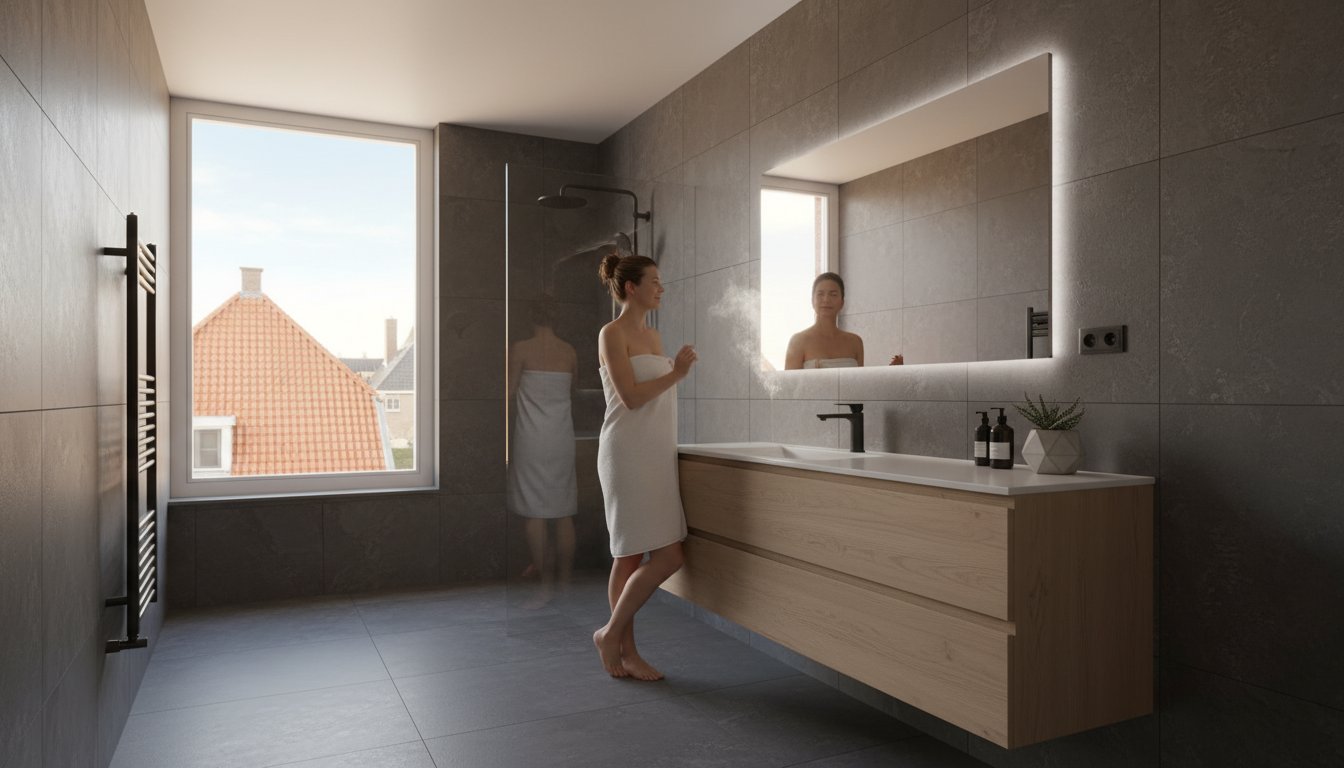
Electric bathroom heating can stand alone or supplement an existing installation. Do not choose by the labels infrared, radiator or convector alone. First establish the function needed, room heat loss and safe positions. This compares complete solutions rather than general promises about speed or consumption.
What should be clear first?
Distinguish room heating, local comfort and towel drying. Assess model approval and installation together. Size and control for the actual situation. A high IP rating, smart app or plug does not make every heater suitable for every bathroom.
Independent heating or supplementing existing equipment
If central heating or a heat pump remains, assess the additional problem the new heater solves. A different schedule may suffice, or more output may be needed. For complete replacement, the combination must meet the full heat demand. Assess the effects of removing a water-fed radiator and any building work too.
Convectors and infrared: compare heat distribution
A convector mainly heats air flowing past it; a panel emits radiation and convection. Distance, obstacles and where you stand affect comfort. Both resistance heaters ultimately convert electricity into heat. This proves neither equal running costs nor that infrared is always cheaper. Compare the same comfort task and actual operating time.
Heating does not remove dust or treat health conditions. A panel does not generally dry walls from within or guarantee mould prevention. Ventilation, moisture production and leaks remain separate concerns. No universal ceiling height makes one technology the winner.
Which electric version suits the intended function?
Heated mirrors may provide room heating, demisting or both. Check capacity, lighting and controls. Towel warmers may be intended only for textiles; use prescribed rails and covering. Wall and ceiling panels each have mounting conditions. Electric underfloor heating needs an approved complete floor construction. Combining systems is not automatically necessary or better.
Heat demand, water exposure and electrical load
A ten-square-metre bathroom has no universal wattage. Include insulation, glazing, ventilation, temperature and use and check positions. Assess local installation rules, protective zones, IP code, approval and connections together. A generic zone or distance table, Class II or thermal protection alone does not provide complete installation permission.
Have a qualified installer check simultaneous loads with other appliances, supply and protection. Place sensors under control instructions rather than one fixed height. Check compatibility, range and switching load and test outage behaviour. Wi-Fi and presence detection exist only where the selected combination supports them.
Check costs, maintenance and quality separately
Compare purchase, controls, installation, maintenance and actual energy use with suitable alternatives. Origin and price prove neither radiant performance, longer life nor property value gains. Request traceable data and separate heater and control warranties. Solar electricity can cover some demand when generation coincides, but does not make a bathroom automatically self-sufficient.
A specified proposal for your bathroom
We advise private and business end users, installers and wholesalers and supply products. Share photos, dimensions, insulation, existing heating and desired controls. Specify products, mounting parts, work and responsibility for installation and commissioning. A product quotation is not an automatic installation promise or confirmation that every requirement is covered.
Explore bathroom panels · Compare convectors by application · Request advice and a quotation
Frequently asked questions about electric bathroom heating
Can I directly replace a water-fed towel radiator?
Assess function, connections and effects on the existing system first. Electric models may have different output and mounting conditions. A power point alone does not prove replacement requires no other work.
How should I assess warm-up time and consumption?
Test from a known starting temperature during representative use. Calculate kWh from input kW times actual operating hours and compare at equal comfort. A hot appliance does not mean the whole room is warm. Continue following maintenance and inspection instructions.