
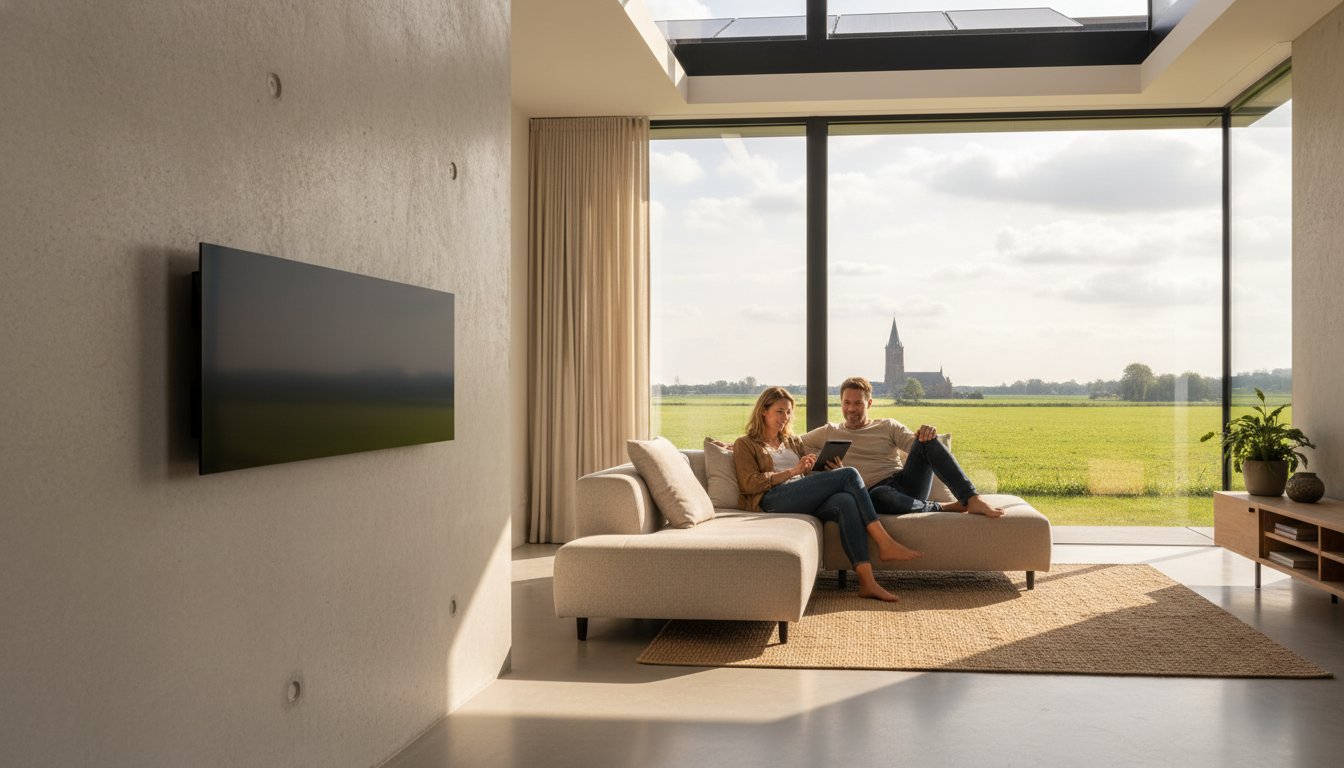
Buying an electric heater starts with what needs warmth: a workstation user, occasional room, terrace or entire building. The same name can cover very different appliances. Use this guide to compare application, supply, controls and complete costs before buying.
Key purchasing questions
Check approved model use and distinguish supplementary from primary heating. Request the manual, mounting conditions and required controls. Do not compare one heater’s price with a quote for a complete alternative system.
Application before appliance type
Local comfort differs from whole-room heating. A whole home needs heat-loss assessment, coverage, electrical capacity and alternatives, including hot water and cooking. A heater does not automatically make the home gas-free, inexpensive or compliant with every building requirement.
Comparing convection and radiation fairly
Convectors transfer much heat to passing air; fan heaters also use a fan. Infrared appliances focus on radiation towards exposed people and surfaces but also produce convection. Wavelength, surface temperature and warm-up vary by model. No category wins in every space.
Resistance appliances ultimately turn nearly all electricity into local heat. A different radiant fraction does not automatically reduce bills. A heat pump can deliver the same heat with less electricity by moving heat. Include it for whole-home or high-hour use.
Heating does not replace ventilation or cleaning or provide general health benefits. Cold air and draughts still affect comfort. Panels do not guarantee dust-free air, better sleep or dry structures. Address moisture causes instead of simply adding heat.
Indoor, outdoor and workplace use
Assess seating or workstations from actual posture and distance. Tables, cupboards or screens may obstruct heat. Bedrooms also require checks of prolonged use, access and sound. A terrace heater is not automatically suitable near a bed or in a small room.
Bathrooms need joint assessment of model, position, water and wiring. Workshops and halls add dust, combustible materials, height and machinery. An IP code alone proves neither overall suitability nor explosion protection. Have the actual application assessed by a specialist.
Determining output and safe mounting
Heat loss determines room capacity using insulation, glazing, ventilation, exposed surfaces, height and temperature. Local heating also needs exposure assessment. Fixed wattage per cubic metre or three panels for thirty square metres is not a complete design. Surplus capacity does not guarantee lower use.
Follow the exact model’s approved wall, ceiling or standing setup. Check support, fixings, clearances, cables and electrical load. Universal heights or circuit limits from an article cannot replace assessment. Keep textiles away and consider hot surfaces around children or vulnerable users.
Controls, solar power and consumption
Choose compatible controls with the correct permitted load. Match schedules and preheating to use and test zones. Apps measure energy only with suitable metering. Motion detection may miss seated people and frost mode does not automatically protect hidden pipes.
Calculate costs from actual kilowatts, on-hours and tariff. Do not assume a fixed duty cycle. Solar power is not always available when needed or automatically free. Dynamic tariffs or solar control require a considered strategy; heating without comfort demand can add energy use.
A proposal based on your application
We advise private and business end users, installers and wholesalers. Share photos, plans, insulation and hours. Compare a complete quote including controls and mounting with alternatives. After installation review comfort and consumption and follow cleaning and inspection instructions.
Request advice and a quote for your application
Frequently asked questions
Does higher price mean lower consumption?
Not automatically. Compare documented performance, suitable use, controls, warranty and complete costs. Material or sales channel alone cannot rank products reliably.