
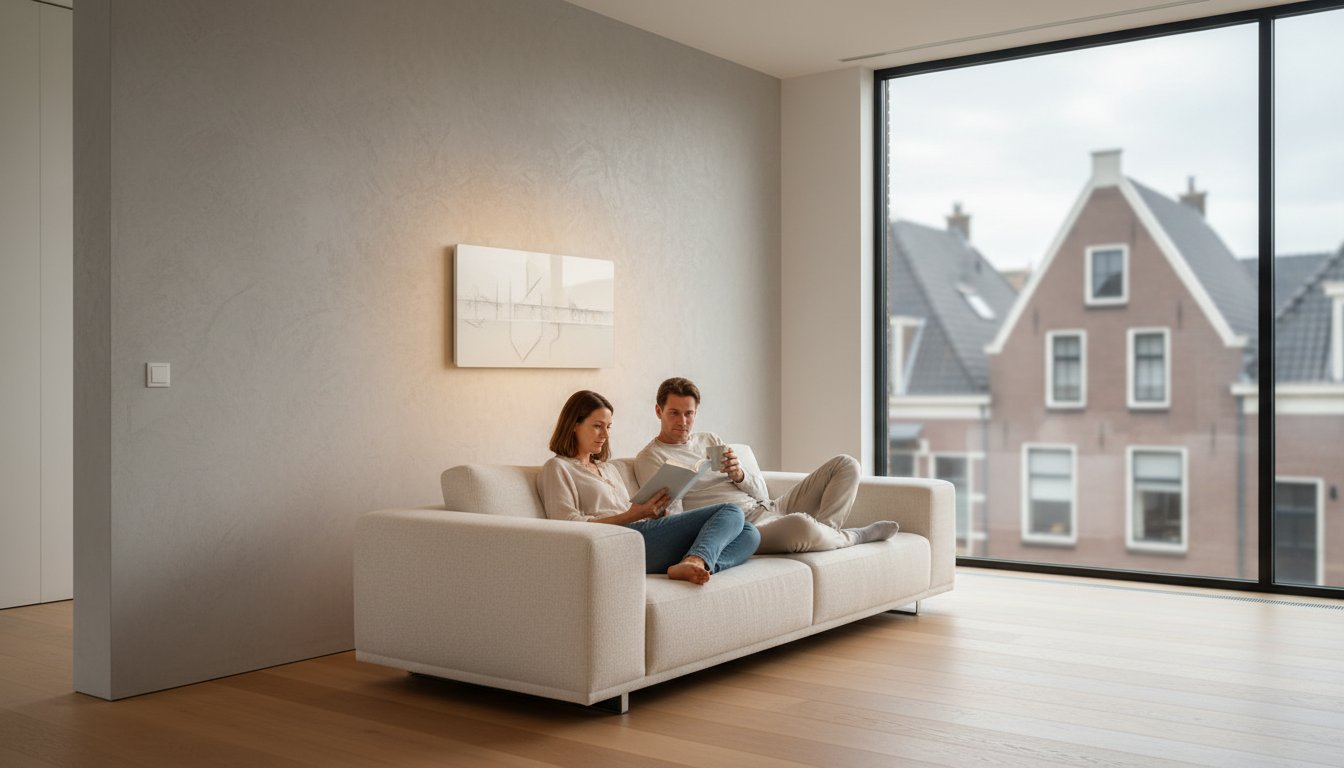
Want extra warmth by the sofa without immediately changing the whole main heating system? Start with the occupied spot, cold surfaces, draughts and daily routine. Infrared panels, convectors and other electric heaters differ in heat delivery and mounting requirements. Compare them for your living room without assuming fixed savings or temperature reductions.
Key considerations
Separate main and supplementary heating. Assess heat demand, placement, controls and total electrical load. Check appearance, accessible hot surfaces and actual functions. Material, brand or a smart app alone does not establish lower consumption.
Coordinate with the main heating system
A panel can direct warmth towards occupied seating, but does not automatically make the rest of the home comfortable. Coordinate settings for everyone and existing radiators or a heat pump. Check what happens when a central sensor detects extra warmth. Maintain necessary background heat, ventilation and frost protection. Window downdraughts and building heat loss do not automatically disappear.
Compare panels and other heaters
Electric resistance appliances convert almost all electricity input into heat. Radiation, convection, fan use and heat storage differ between models. Tables or chairs can block radiation; a convector requires clear airflow. Assess warm-up, noise, residual heat and permitted operating duration for each appliance. Heating panels do not treat allergies or remove airborne dust; ventilation and cleaning remain necessary.
Choose output and controls
Assess heat loss, occupied zone, insulation, glazing, height and existing heat delivery together. A generic output per square metre, energy label or example room is no substitute. Calculate consumption from kilowatt input and actual operating hours, multiplied by your tariff. Check compatibility between thermostat, receiver and panel. Wi-Fi, Zigbee, window detection and programmes are not included in every model and do not guarantee savings.
Finish and interior placement
Compare metal, glass, mirror and printed panels for size including fixings, weight, output and available finishes. Uniform thickness, every RAL colour or a mirror that never fogs are not universal properties. Wall or ceiling mounting must be permitted by the manual. A ceiling panel does not guarantee an underfloor-heating effect; obstructions, distance and furniture matter. Have supports, clearances and cable routing checked.
Investment, quality and maintenance
Compare purchase, controls, mounting, energy and maintenance for the same comfort goal. Warranty duration does not establish lifespan, nor origin automatic certification. Ask for exact-model documentation. A panel alone does not promise a payback period, increased property value or an improved energy rating. Solar electricity may cover simultaneous use but does not guarantee free winter heat. Clean and inspect as instructed.
Advice for your living room
Send plans, seating photos and insulation, occupancy and main-heating details. We help private and business end users, installers and wholesalers with products, controls and quotations. Include children, pets and preferred operation. A suitable trial installation can help assess comfort before expansion.
Frequently asked questions
There is no universally most economical heater or fixed warm-up time. Output and costs depend on the situation. A plug does not make every mounting suitable for DIY: have fixed wiring and circuit load assessed. Surfaces can cause burns; protect vulnerable users, do not cover the appliance and follow safety instructions. When combining with radiators, assess total energy use and comfort in all occupied rooms.