
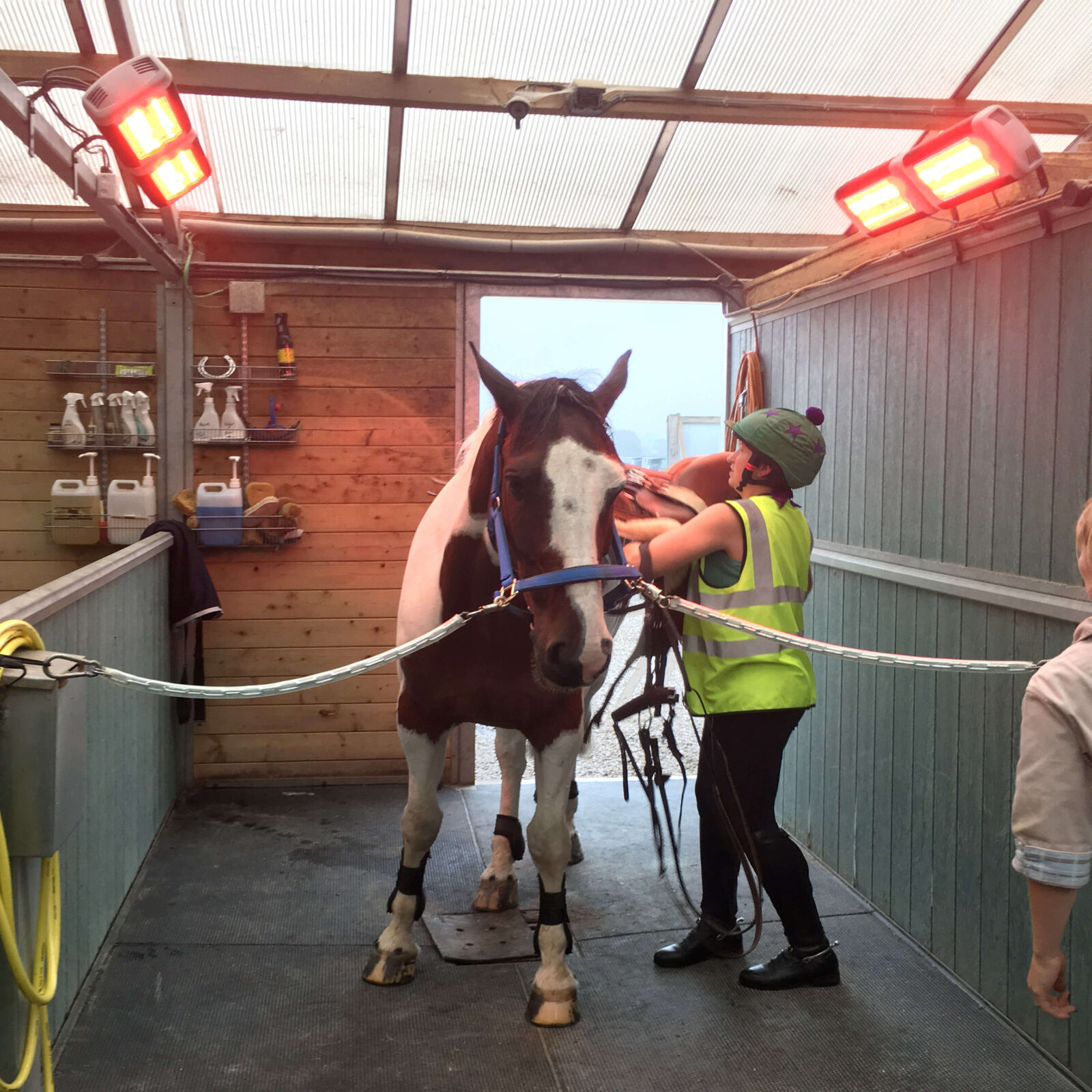
Heating animal housing: start with the animal and its environment
Infrared heating can provide local warmth in animal housing, but an ordinary room panel is not automatically suitable for every animal or enclosure. Match temperature, distance, operating time and installation to the species, age, health and layout. Ask a veterinarian about welfare or health concerns.

Radiant heat and daily care
Panels and heaters can radiate heat towards animals and surfaces; convection also occurs. Heat distribution depends on the appliance, obstructions, distance and surrounding air. There is no universal range that comfortably heats every corner of a stable or kennel. Allow animals enough room to move away from the warmest area.
Suitable use and safe installation
Requirements differ between horse stables, poultry houses, pigeon lofts and kennels. Check that the manufacturer expressly permits the intended use. Consider dust, feathers, bedding, moisture, chewing and accessible hot parts. Have fixings, electrical protection and controls assessed and follow the manual. An IP rating does not establish suitability for fire or explosion hazards.
Assessing costs and maintenance
Calculate electricity costs from input power in kilowatts, actual operating time and your tariff. Compare existing heating at the same heat demand and conditions, without fixed hourly costs or promised savings. Infrared heating does not remove dust or bacteria or demonstrate muscle recovery or improved circulation. Ventilation, cleaning and inspection remain necessary. Send us the application and housing details; we advise end users, installers and wholesalers on suitable combinations.